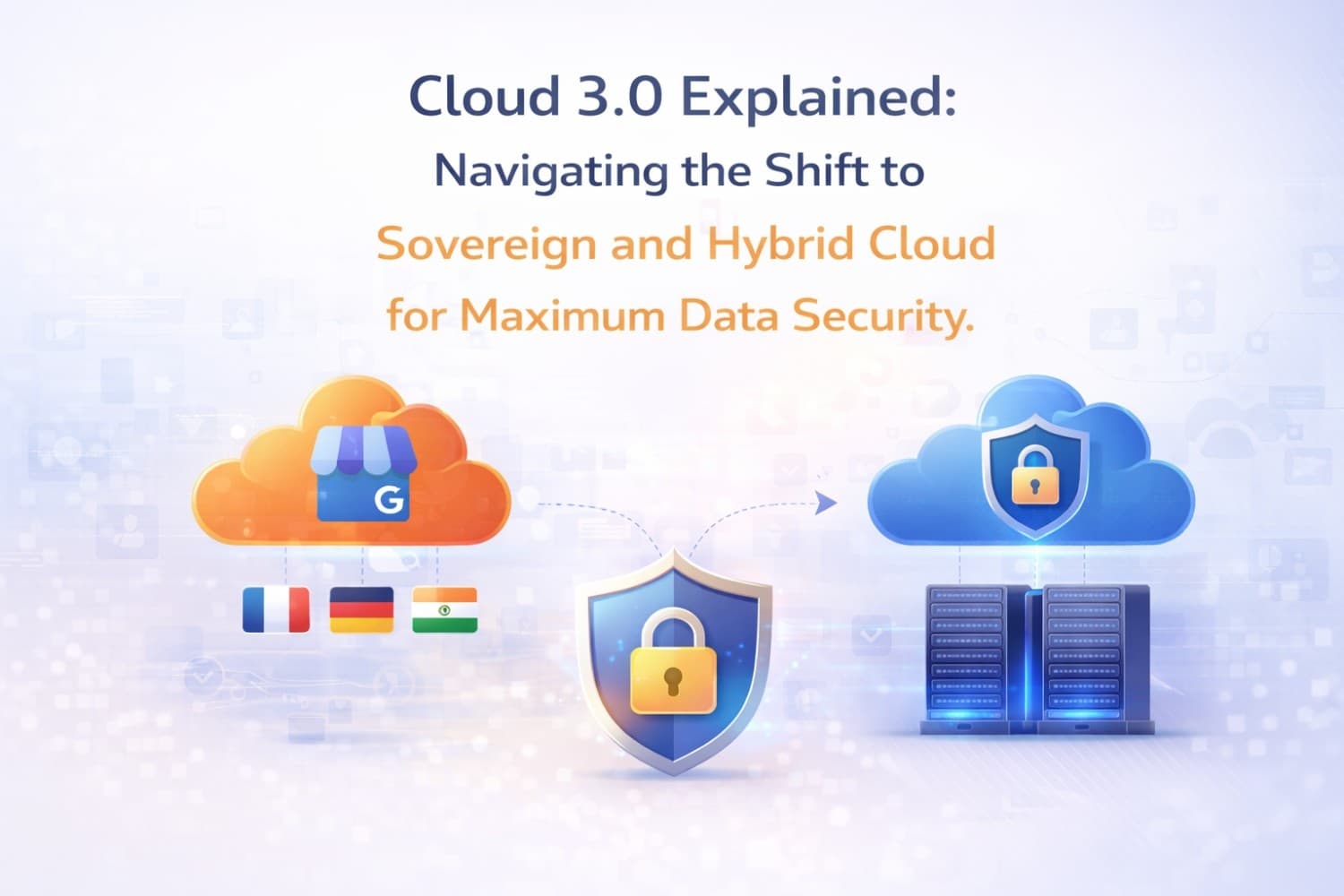
Cloud 3.0 Explained: Navigating the Shift to Sovereign and Hybrid Cloud for Maximum Data Security
Learn how Cloud 3.0 is transforming cloud computing with sovereign cloud and hybrid cloud strategies for stronger data security, compliance, and scalability
Cloud computing has evolved rapidly over the past decade. What started as simple cloud storage and virtual servers has now transformed into highly intelligent, secure, and flexible cloud ecosystems. In 2026, businesses worldwide are entering a new era known as Cloud 3.0. Cloud 3.0 focuses on data sovereignty, hybrid cloud architecture, advanced security, and intelligent cloud management. Organizations are no longer relying on a single public cloud provider. Instead, they are adopting a combination of sovereign cloud environments and hybrid cloud infrastructure to gain better control, security, and compliance over their data. This guide explains what Cloud 3.0 is, why it matters, and how businesses can adopt sovereign and hybrid cloud strategies to achieve maximum data security.
What Is Cloud 3.0?
Cloud 3.0 represents the next phase of cloud computing, where security, compliance, and flexibility become the top priorities.
Earlier cloud models focused mainly on scalability and cost efficiency. Cloud 3.0 introduces data sovereignty, hybrid cloud integration, and multi-cloud security frameworks.
- •Cloud 1.0 – Basic cloud infrastructure and storage
- •Cloud 2.0 – Scalable public cloud services and SaaS platforms
- •Cloud 3.0 – Secure, sovereign, and hybrid cloud ecosystems
Cloud 3.0 allows organizations to combine the best features of public cloud, private cloud, and on-premise infrastructure.
Why Cloud 3.0 Is Becoming Essential in 2026
Businesses today are dealing with massive volumes of data and stricter compliance regulations. Governments and industries demand that sensitive data remain within specific geographical boundaries.
Key reasons driving Cloud 3.0 adoption include:
- •Increasing cybersecurity threats
- •Data protection regulations
- •Need for geographic data control
- •Growing demand for hybrid IT infrastructure
- •AI and big data workloads requiring flexible cloud environments
Companies that adopt Cloud 3.0 gain stronger control over their digital infrastructure while maintaining scalability.
Understanding Sovereign Cloud
A sovereign cloud ensures that data is stored, processed, and managed within a specific country's legal jurisdiction. This means organizations can comply with national regulations while still benefiting from cloud technology.
Key Features of Sovereign Cloud
- •Data stored within national borders
- •Compliance with local regulations
- •Strong governance and data ownership
- •Enhanced security controls
- •Transparent cloud infrastructure management
Governments, financial institutions, healthcare providers, and defense sectors often rely on sovereign cloud environments.
What Is Hybrid Cloud?
A hybrid cloud combines public cloud services with private cloud or on-premise infrastructure. This architecture allows organizations to choose where their workloads run based on performance, cost, and security requirements.
For example, sensitive customer data may remain in a private cloud, while public applications run on scalable public cloud platforms.
Hybrid cloud environments provide both flexibility and security, making them a key pillar of Cloud 3.0.
Sovereign Cloud vs Hybrid Cloud
| Feature | Sovereign Cloud | Hybrid Cloud |
|---|---|---|
| Data location control | High | Moderate |
| Compliance support | Strong | Flexible |
| Infrastructure model | Regulated environments | Private + Public cloud |
| Security level | Very high | High |
| Scalability | Moderate | Very high |
Many organizations use both sovereign and hybrid cloud models together to maximize security and scalability.
Key Benefits of Cloud 3.0
Enhanced Data Security
Cloud 3.0 architectures introduce stronger encryption, secure access controls, and isolated environments that significantly reduce the risk of cyber attacks.
Compliance with Data Regulations
Data sovereignty ensures compliance with regional laws covering data protection, financial compliance standards, and healthcare information privacy.
Flexible Workload Management
Hybrid cloud allows organizations to distribute workloads across multiple environments, improving performance and ensuring business continuity.
Scalability Without Compromising Security
Companies can scale applications on public cloud infrastructure while keeping sensitive data within controlled environments.
Cost Optimization
High-demand workloads can run on public cloud services, while critical systems remain on private infrastructure — balancing cost and performance.
Industries Benefiting from Cloud 3.0
Healthcare
Hospitals and healthcare providers must protect patient records while maintaining accessibility for doctors and medical staff.
Financial Services
Banks and fintech companies rely on sovereign cloud environments to manage highly sensitive financial data.
Government and Public Sector
Government institutions must store data within national boundaries for security and compliance reasons.
E-commerce and Retail
Online platforms need scalable cloud environments while ensuring customer data protection.
IT and Software Companies
Technology firms can deliver secure cloud solutions, DevOps automation, and AI-driven infrastructure management through hybrid cloud strategies.
Key Technologies Powering Cloud 3.0
Zero Trust Security
Zero trust models verify every user and device before granting access to cloud resources.
AI-Powered Cloud Monitoring
Artificial intelligence analyzes system behavior to detect threats and optimize performance automatically.
Containerization and Kubernetes
Container orchestration tools allow applications to run consistently across different cloud environments.
Edge Computing
Processing data closer to its source reduces latency and improves real-time performance.
How Businesses Can Adopt Cloud 3.0
- •Step 1: Evaluate Current Cloud Infrastructure — Analyze existing architecture to identify security and scalability gaps.
- •Step 2: Identify Sensitive Data — Classify data based on sensitivity and compliance requirements.
- •Step 3: Implement Hybrid Cloud Architecture — Combine private cloud infrastructure with public cloud services.
- •Step 4: Strengthen Security Frameworks — Adopt zero trust architecture and encryption policies.
- •Step 5: Partner with Cloud Experts — Work with experienced cloud solution providers for secure and scalable deployment.
Challenges in Cloud 3.0 Adoption
Infrastructure Complexity
Managing hybrid and sovereign cloud systems requires advanced cloud management tools.
Compliance Requirements
Organizations must stay updated with evolving data protection laws.
Skilled Workforce
Cloud engineers and DevOps professionals are essential for maintaining complex cloud environments.
The Future of Cloud Computing
Cloud 3.0 marks the beginning of a new generation of cloud infrastructure. Future developments may include:
- •Fully autonomous cloud management
- •AI-driven security frameworks
- •Multi-cloud orchestration platforms
- •Advanced edge computing networks
As digital transformation accelerates, businesses that adopt secure and intelligent cloud strategies will remain competitive.
Conclusion
Cloud computing is evolving beyond simple infrastructure services. With increasing cybersecurity threats and strict data protection laws, businesses must adopt smarter cloud strategies.
Cloud 3.0 combines sovereign cloud security with hybrid cloud flexibility, enabling organizations to control their data while maintaining scalable digital operations.
Companies that embrace this new cloud paradigm will gain stronger security, regulatory compliance, and operational efficiency in the rapidly changing digital landscape.
If your organization is planning to upgrade its cloud infrastructure, now is the right time to explore secure hybrid and sovereign cloud solutions. Call +91 72488 00839 or Email info@zentrixinfotech.com
Frequently Asked Questions
What is Cloud 3.0?
Cloud 3.0 is the next generation of cloud computing focused on data sovereignty, hybrid infrastructure, and advanced security frameworks.
What is a sovereign cloud?
A sovereign cloud ensures that data is stored and processed within a specific country's legal jurisdiction to comply with data regulations.
How does hybrid cloud improve security?
Hybrid cloud allows sensitive data to remain in private infrastructure while less critical workloads run on public cloud platforms.
Is Cloud 3.0 suitable for small businesses?
Yes. Small and mid-sized businesses can adopt hybrid cloud solutions to improve scalability and security without large infrastructure investments.
Which industries need sovereign cloud the most?
Industries such as finance, healthcare, government, and defense rely heavily on sovereign cloud environments due to strict data compliance requirements.
Related Articles

Why Every Business Needs a Professional Website
A professional website is no longer optional. It builds trust, strengthens online visibility, and helps businesses convert visitors into long-term customers.
Clawd Bot: The AI Assistant That Can Actually Work for Your Business in 2026
Learn how advanced AI assistants are transforming business operations, customer support, and scalability in 2026.

Sarvam AI Explained: An India-First Approach to Artificial Intelligence
Discover what Sarvam AI is, why it matters, how it works, and what businesses can learn from this India-first AI initiative.