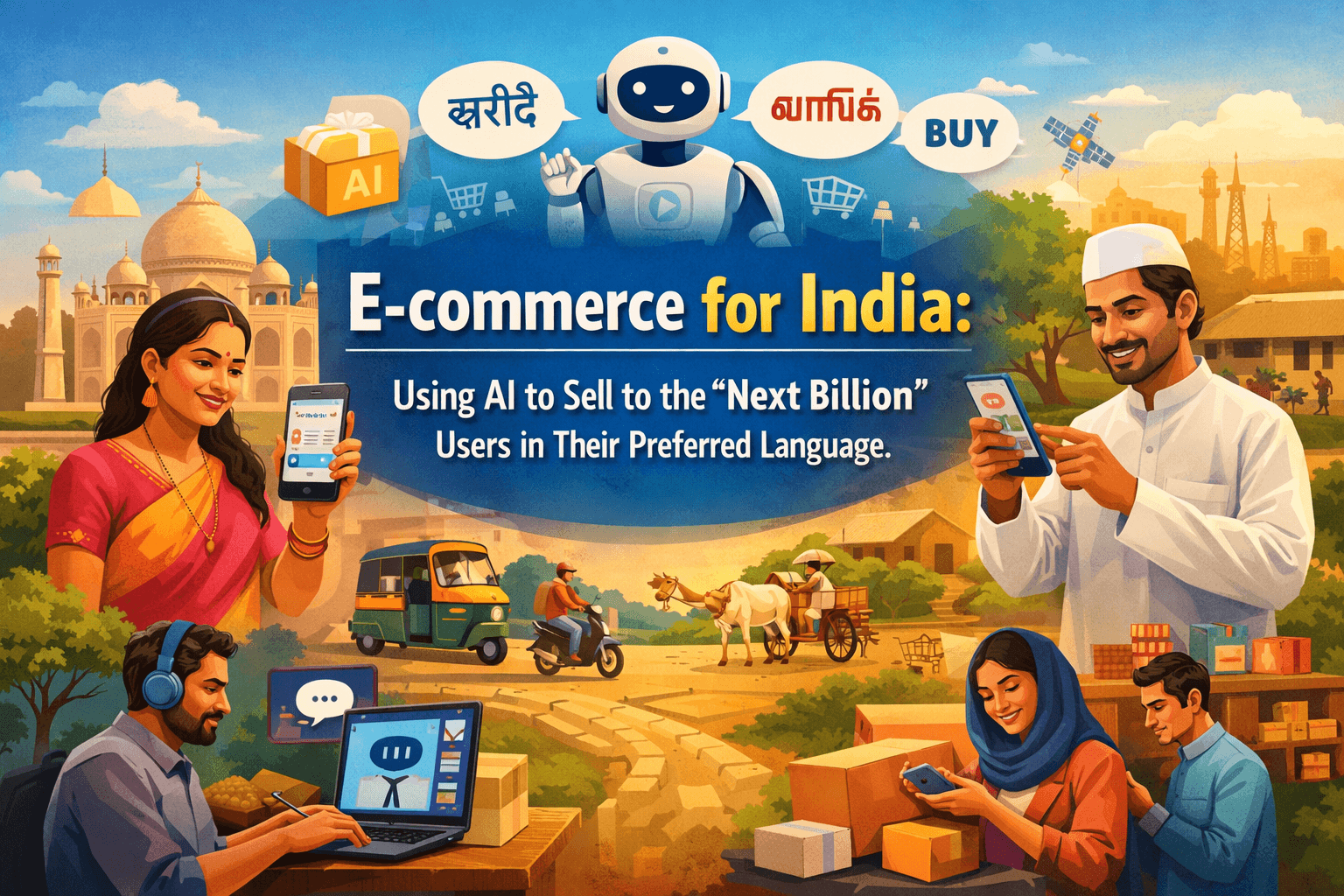
E-commerce for India: Using AI to Sell to the 'Next Billion' Users in Their Preferred Language
Learn how AI helps e-commerce businesses in India reach the next billion users through multilingual content, voice search, and personalization strategies.
India is witnessing one of the fastest digital adoption rates in the world. The next phase of growth in e-commerce is being driven by users from Tier 2, Tier 3 cities, and rural regions — commonly referred to as the "Next Billion Users" (NBUs). Unlike early internet adopters, these users prefer regional languages, rely on voice search, and expect simple, personalized digital experiences. Traditional English-first e-commerce platforms often fail to connect with this audience. This is where Artificial Intelligence becomes a game-changer. AI enables businesses to deliver multilingual, personalized, and intuitive shopping experiences, helping them unlock a massive untapped market. In this guide, we explore how AI can help your e-commerce business scale across India and capture this emerging audience effectively.
Understanding India's Next Billion Users
Who Are the Next Billion Users?
- •First-time or early-stage internet users
- •Residents of non-metro cities and rural areas
- •Users who prefer Hindi, Tamil, Telugu, Bengali, Marathi, and other regional languages
- •Mobile-first users with limited exposure to complex digital interfaces
- •Price-conscious but highly aspirational buyers
Key Behavioral Traits
- •Prefer voice-based search over typing
- •Consume more video and visual content
- •Trust platforms that communicate in their native language
- •Need simplified navigation and checkout processes
Market Opportunity
India has over 800 million internet users, with a large percentage coming from non-English-speaking backgrounds. This segment is expected to drive the majority of future e-commerce growth. Businesses that adapt to this shift early will gain a strong competitive advantage.
The Role of AI in Indian E-commerce
Artificial Intelligence is not just a technology trend — it is a strategic enabler for reaching diverse audiences in India.
1. AI-Powered Multilingual Content
AI-driven translation tools allow e-commerce platforms to convert product descriptions into multiple languages, provide localized interfaces, and improve accessibility and comprehension. This removes language barriers and increases customer confidence.
2. Voice Search Optimization
Voice search is rapidly growing in India due to ease of use. AI enables platforms to understand regional accents and dialects, process natural language queries, and deliver accurate search results. Optimizing for voice search helps capture users who are not comfortable typing in English.
3. Personalized Shopping Experience
AI analyzes user browsing behavior, purchase history, and geographic location to provide personalized product recommendations, location-specific offers, and relevant content in the user's preferred language. This leads to higher engagement and conversions.
4. AI Chatbots and Customer Support
AI-powered chatbots provide instant customer support in regional languages, assistance with product selection, and order tracking and issue resolution. This builds trust among first-time online buyers.
5. Demand Forecasting and Logistics Optimization
AI helps businesses predict demand based on region and season, optimize inventory management, and improve delivery timelines. Efficient logistics is critical for customer satisfaction in remote areas.
Benefits of Using AI in Vernacular E-commerce
| Benefit | Impact |
|---|---|
| Higher Conversion Rates | Customers purchase more when they understand content in their native language |
| Improved User Experience | Localized interfaces make navigation easier and more intuitive |
| Increased Customer Retention | Personalized experiences encourage repeat purchases |
| Wider Market Reach | AI scales across multiple regions without manual effort |
| Better ROI | Targeted marketing reduces acquisition costs and improves returns |
How to Implement AI in Your E-commerce Business
Step 1: Build a Multilingual Platform
- •Integrate AI-based translation tools
- •Offer language selection options
- •Ensure cultural relevance in content
Step 2: Optimize for Voice Search SEO
- •Use conversational keywords
- •Focus on long-tail queries
- •Include FAQs in natural language
Step 3: Implement Recommendation Engines
- •Use AI to analyze user data
- •Display relevant products dynamically
- •Personalize homepage content
Step 4: Deploy AI Chatbots
- •Provide multilingual support
- •Automate common queries
- •Improve response time
Step 5: Use Data Analytics for Insights
- •Track user behavior across regions
- •Identify trending products
- •Adjust marketing strategies accordingly
Content Strategy for Regional E-commerce Growth
Use Simple and Clear Language
Avoid complex terminology. Keep content easy to understand for first-time digital users.
Focus on Visual Content
Images, icons, and videos improve engagement, especially for new users who may find text-heavy pages overwhelming.
Create Regional Content
Develop blogs, product descriptions, and ads in multiple languages to connect authentically with regional audiences.
Leverage Local Influencers
Collaborate with regional creators to build trust and expand your reach into local communities.
Challenges in AI-Based E-commerce
Language Accuracy
AI translations may not always be perfect. Solution: Combine AI with human review to ensure quality and cultural relevance.
Cultural Differences
Direct translation may not reflect cultural nuances. Solution: Use localized content strategies tailored to each region.
Technical Implementation
AI integration can be complex without the right expertise. Solution: Work with experienced development teams who understand both AI and e-commerce.
Future Trends in Indian E-commerce
- •Voice commerce will become mainstream across all product categories
- •Hyper-personalization will define the user experience
- •Regional language content will dominate engagement metrics
- •AI automation will significantly reduce operational costs
Businesses that invest in AI today will lead tomorrow's market. The window to establish early dominance in regional markets is open right now.
Why AI is Essential for Scaling in India
India's diversity requires more than a one-size-fits-all approach. AI allows businesses to communicate effectively in multiple languages, deliver personalized experiences at scale, and build trust with new digital users — all of which directly impact growth, engagement, and revenue.
The combination of multilingual capability, voice search readiness, and intelligent personalization creates a compounding advantage that becomes harder for competitors to replicate over time.
Conclusion
India's next billion users represent the single largest growth opportunity in global e-commerce. These users are online, they are ready to buy, but they need platforms that speak their language — literally and culturally.
AI makes it possible to meet this audience where they are, in the language they prefer, with experiences tailored to their needs. Businesses that act now will capture market share that will be difficult to reclaim later.
The future of Indian e-commerce is multilingual, voice-first, and AI-powered.
If you are planning to expand your e-commerce business in India, adopting AI is no longer optional — it is essential. Contact Zentrix Infotech to build a scalable, future-ready platform. Call +91 72488 00839 or Email info@zentrixinfotech.com
Frequently Asked Questions
What are Next Billion Users in India?
They are new internet users from smaller cities and rural areas who prefer regional languages and mobile-first experiences.
How does AI help in multilingual e-commerce?
AI enables translation, personalization, and communication in multiple languages, improving accessibility and engagement.
Why is voice search important for Indian users?
Many users find voice search easier than typing, especially in regional languages, making voice optimization critical for reaching this audience.
Is AI suitable for small e-commerce businesses?
Yes, scalable AI tools make it accessible and cost-effective for startups and small businesses of all sizes.
Which languages should e-commerce businesses focus on?
Hindi, Tamil, Telugu, Bengali, and Marathi are among the most important languages to start with for maximum reach.
How can I improve my e-commerce SEO for India?
Focus on multilingual content, voice search optimization, mobile-first design, and local keyword targeting to improve visibility.
Related Articles

How a High-Performance Website Increases Leads and Sales
A high-performance website turns your online presence into a 24/7 sales engine by attracting better-quality traffic, keeping visitors engaged, and converting more of them into leads and paying customers. Performance is directly linked to SEO visibility, trust, and revenue.

IT Outsourcing vs In-House Team: What's Better for Growing Companies?
IT outsourcing vs in-house IT team is not a one-size-fits-all decision. Growing companies usually get the best results by balancing cost, control, and speed to market, often with a strategic outsourcing partner supporting core in-house capabilities.

Role of Software & Automation in Business Growth
In a competitive market, manual processes quickly become bottlenecks. Smart software and business automation free your team from repetitive work, improve accuracy, and create a smoother experience for your customers.